Before the Proof: Why Breeders Are Going Back to This Catt Shines
Five breeding programs. Five different goals. One shared decision to go back to This Catt Shines after seeing what he produced.
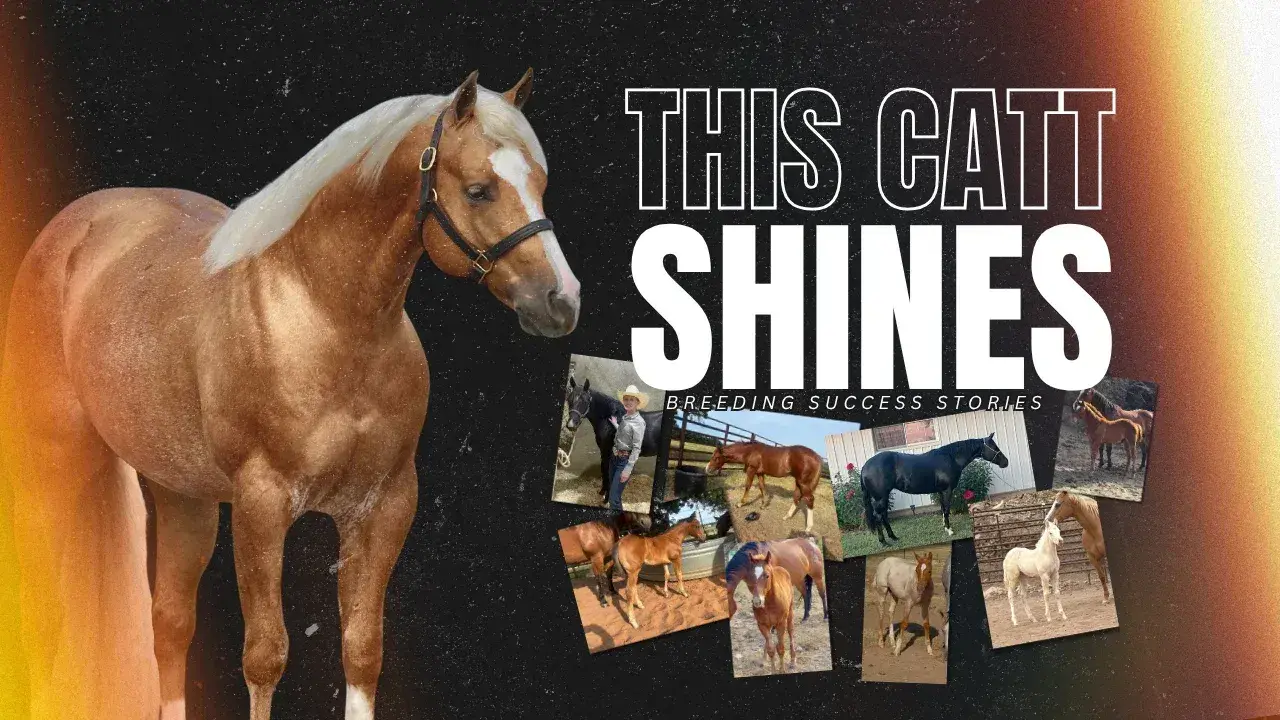
There is a certain amount of trust involved in breeding to a young stallion.
Before the first foals are on the ground, there are no offspring records to study or proven crosses to replicate. There is only the horse standing in front of you: his pedigree, ability, mind, build and the belief that those qualities will pass on.
That was the decision breeders made when they sent mares to This Catt Shines early in his breeding career.
Now, those first decisions are coming full circle.
The foals have arrived. Breeders have watched them grow, studied how they are put together and seen their dispositions firsthand. And when it came time to make their next breeding decisions, they went back.
In many cases, with more than one mare.
Rodney Teichert: Building Versatility
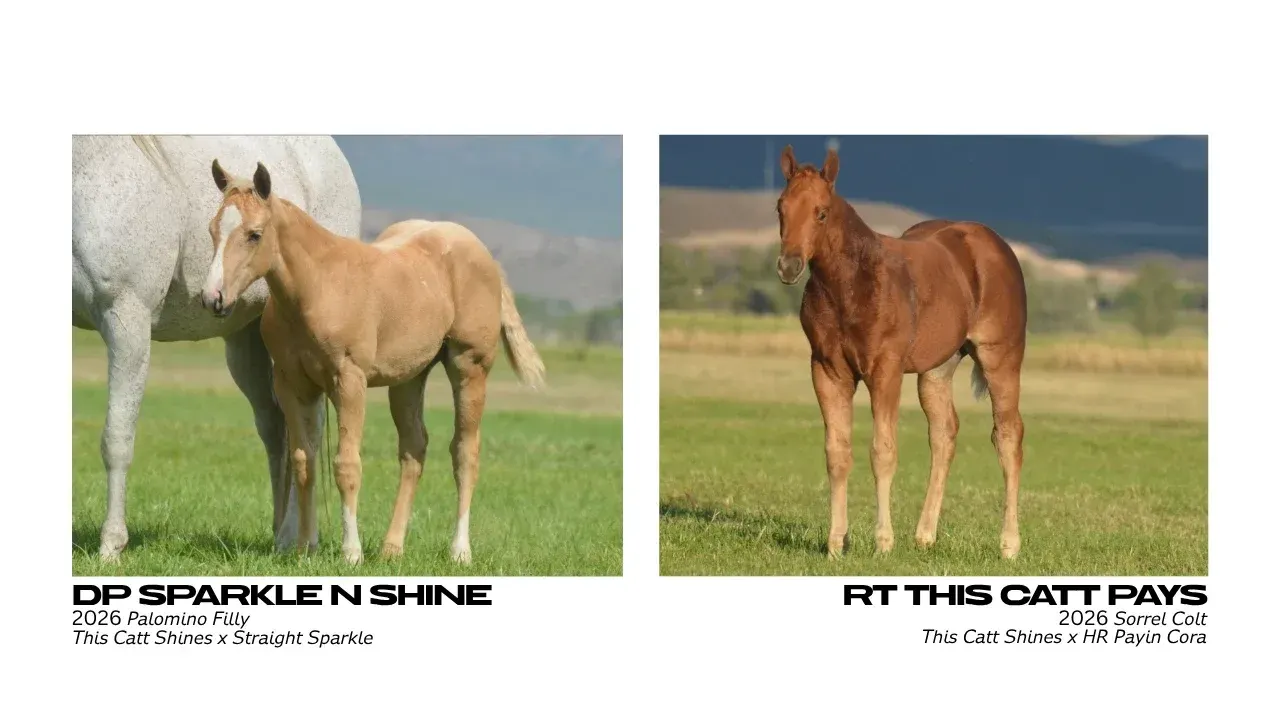
Rodney Teichert was initially drawn to This Catt Shines through two bloodlines he had always admired: WR This Cats Smart and Shining Spark. But watching the stallion work gave him another reason.
“I thought he was really complete conformationally,” Teichert said. “Not really weak in any areas, but really good in a lot of them.”
For the first cross, Teichert chose a daughter he had out of his own heel horse stallion, hoping to produce an exceptional heel horse prospect.
When the colt arrived, his disposition stood out immediately.
“He was super chill minded,” Teichert said. “He just kind of wanted to be your buddy.”
That colt has since sold, but Teichert has continued using This Catt Shines, including on larger mares where he believes the stallion can shorten their backs, get their hocks underneath them and produce versatile rope horse prospects.
Barry Nix: From One Decision to Four Mares
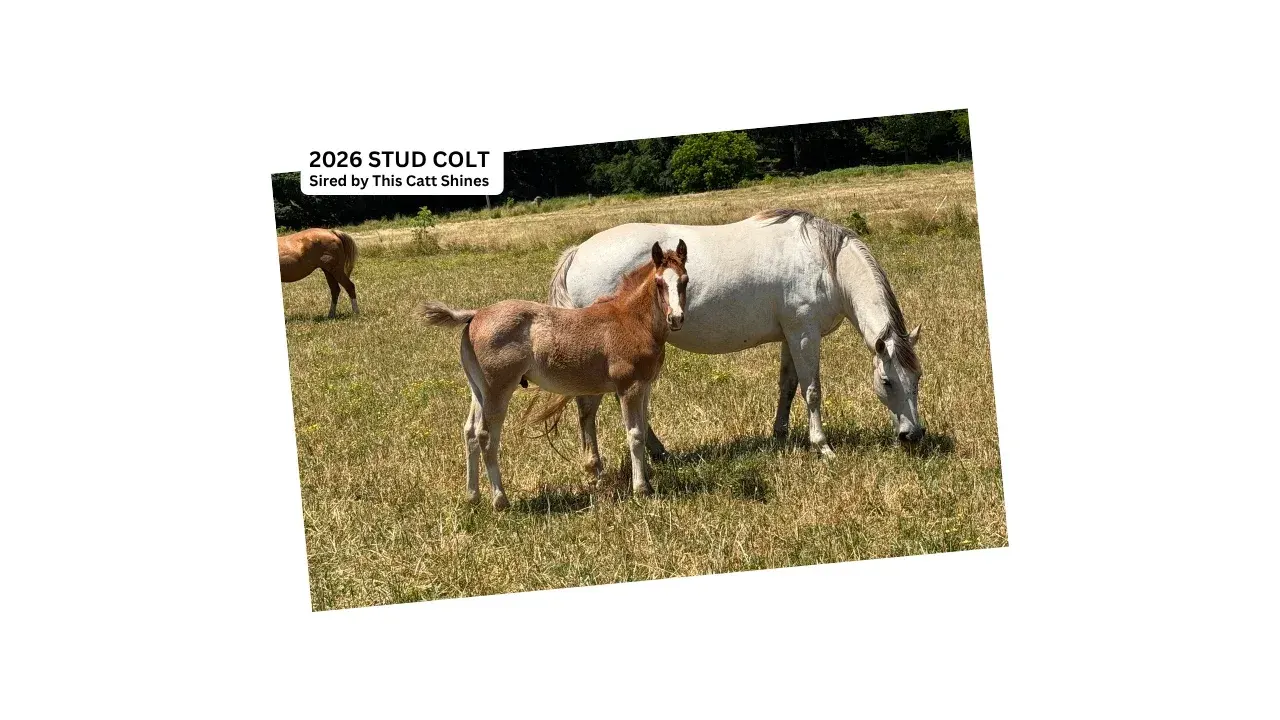
Barry Nix breeds with one job at the forefront: tie-down roping.
“His color had nothing to do with my choice,” Nix said. “His calf roping recognition had just about everything to do with it.”
Nix liked the natural stop, build, size and conformation he saw in This Catt Shines. His family keeps only a small number of young horses each year, making each breeding decision intentional.
Today, Nix has two young This Catt Shines foals in his barn from two different mares. He is careful not to predict what they will become while they are still babies, but he has seen enough to increase his commitment.
This year, Nix bred four mares to This Catt Shines.
For a program that keeps its numbers small and breeds specifically for the calf roping pen, that decision carries weight.
“Mind is very, very important,” Nix said.
Jeff Medlin: A Cross Worth Repeating
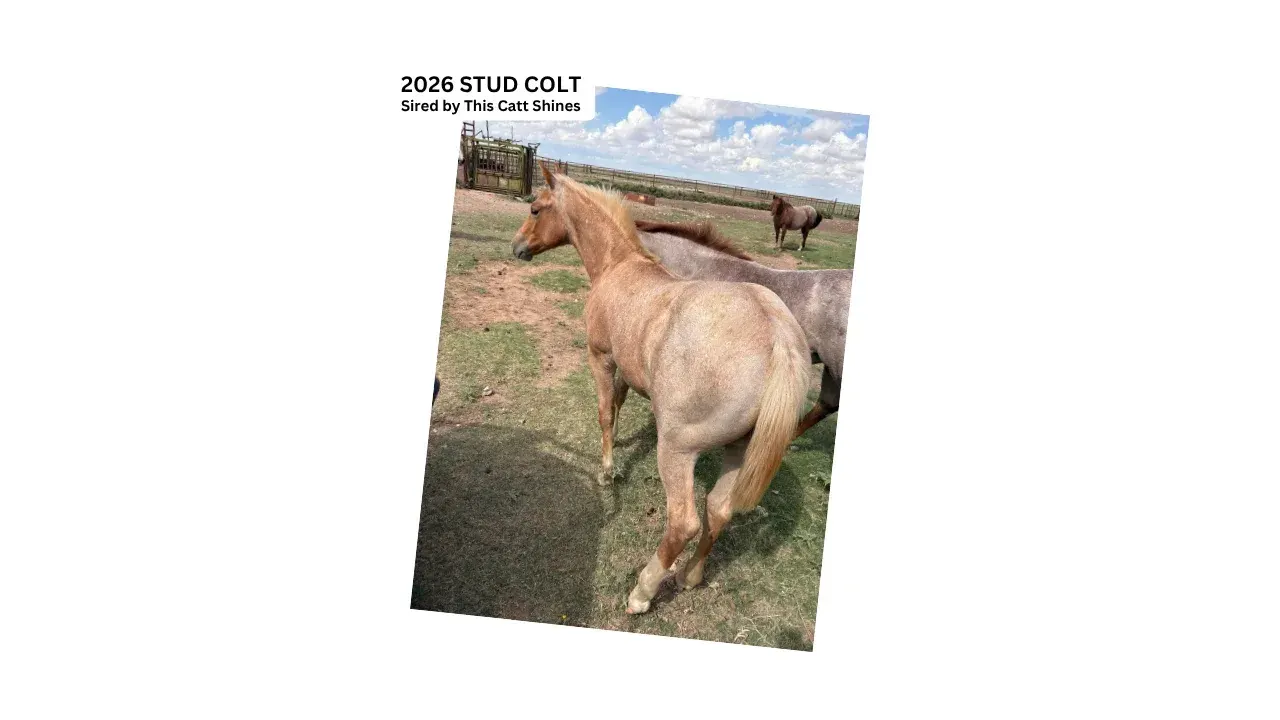
Jeff Medlin and his family were looking to raise a performance rodeo horse.
Medlin qualified for the National Finals Rodeo twice as a heeler. His son Logan Medlin has qualified five times as a heeler, while his son-in-law Blane Cox has qualified twice in calf roping. The family understands what the job demands. They crossed their mares, which carry Playgun, High Brow Cat and Freckles Playboy influence, on This Catt Shines, looking to add size and substance while maintaining athletic ability.
What stood out in the resulting colt was something much simpler.
“He’s just like a dog,” Medlin said. “He just wants you to come up there.”
Raised in the pasture with little handling, the colt was quiet enough that Medlin could put his granddaughter on his back while he stood there.
“He didn’t care.”
The Medlins liked what they saw enough to make the clearest decision possible: the same mare is bred back to This Catt Shines again.
Shanon Campbell: Consistency Across the Board
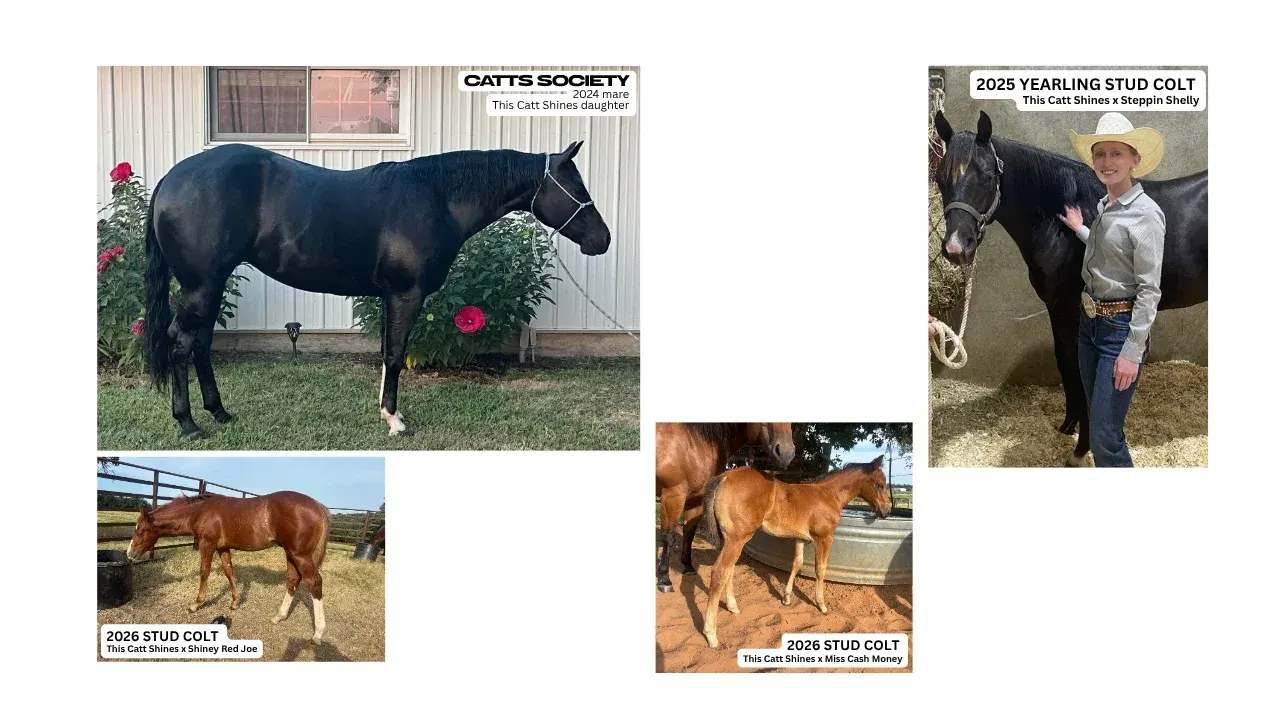
Shanon Campbell’s family didn't start with one mare. They gave This Catt Shines three.
Three mares produced three foals, giving Campbell an opportunity to see whether the qualities they were looking for would repeat.
They did.
“We liked the disposition, the consistency, the conformation and the look that we’re able to sell to market,” Campbell said.
When the next breeding season arrived, the family chose to breed all three mares back.
“The consistency is probably the biggest thing,” Campbell said. “Obviously, we would not have bred back if the consistency wasn’t there.”
The offspring have also proven marketable. Two have made their way to the Dominican Republic, where Campbell said they are expected to become part of a developing rope horse breeding program.
Just as important to Campbell is what happens after those foals leave his hands. He said the buyers of their This Catt Shines offspring have been happy with the horses they received, reinforcing the consistency he first saw at home.
But the program has a purpose beyond producing and selling good horses. Proceeds from the colts help fund his daughter Madilynn’s college education. Now a senior at West Texas A&M University with plans to attend veterinary school, Madilynn has made the breeding program something the two can build together while staying connected to the horse industry.
For the Campbells, breeding back to This Catt Shines means continuing something that is working both in the pasture and for the future they are building beyond it.
Lyman and Gwen Tenney: They Changed the Mare, Not the Stallion
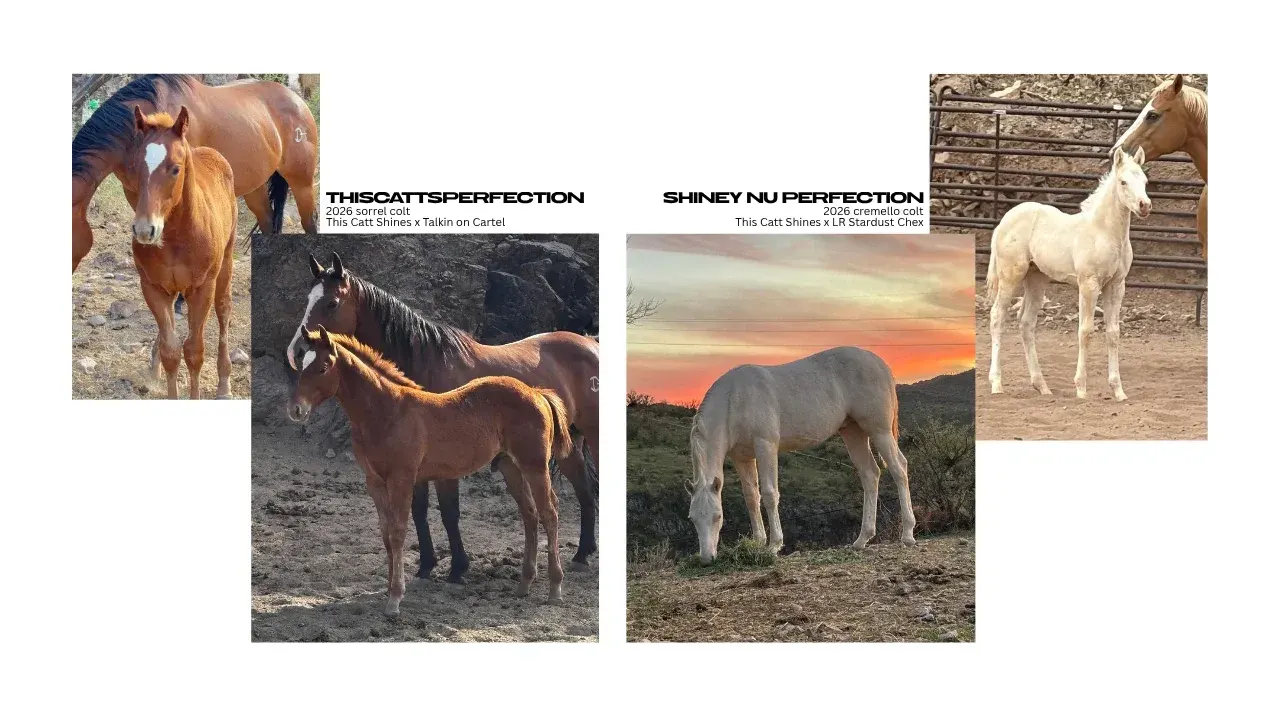
Lyman and Gwen Tenney first took a chance on This Catt Shines after Gwen saw him in a marketing campaign.
“I just was like, ‘Okay, I feel like this is the one,’” Gwen said.
The Tenneys initially bred a Nu Chex To Cash mare to him with the goal of producing a future Riata rope horse. The resulting colt immediately impressed Gwen with his correctness and disposition.
“He was super straight legged. He was perfect,” Gwen said. “His demeanor is fantastic. He’s just calm, cool and collected.”
For the next breeding, the Tenneys wanted more speed, so they changed mares but kept the stallion. They selected a Corona Cartel and Dash For Cash bred mare with four starts on the track and three checks.
The second colt weighed 116 pounds at birth, above the typical 90- to 110-pound range for American Quarter Horse foals and an early sign of the substance the Tenneys wanted. More importantly, Gwen recognized something from the first cross.
“Same calm, cool demeanor,” she said. “Absolutely just sweet.”
That mare is now bred back to This Catt Shines again.
The Tenneys plan to continue building around the stallion as they work to combine speed with cow, stop, conformation and mind for the Riata.
“We will stick with him unless something wild goes,” Gwen said. “That’s our plan, to keep breeding to him.”
Earning the Second Breeding
There is an advantage to waiting until a stallion is proven. There are performers to watch, earnings to count and crosses someone else has already tested.
But every proven breeding program begins with someone willing to go first.
These breeders did.
Now their first This Catt Shines foals are standing in pastures and barns across their programs. They are still young, and their performance stories remain unwritten.
But something important has already happened.
The breeders who trusted him early are bringing him more mares.
Barry Nix went back with four. Shanon Campbell’s family returned with three. Jeff Medlin repeated the exact cross. Rodney Teichert expanded the types of mares he was willing to breed to him. Lyman and Gwen Tenney saw similar qualities through two different mares and went back again.
The first breeding was based on what they believed This Catt Shines could produce.
The next one was based on what he did.
Get your 2027 This Catt Shines contract today!