

Equine ICSI Learning Center
Understand what happens from follicular aspiration through embryo transfer—and how to interpret oocytes, maturation, cleavage, blastocysts, pregnancy rates, costs, timing, and the choices that shape an individual breeding plan.
Start with clarity
ICSI is a sequence, not one success rate
Oocytes are collected from a donor mare. Mature oocytes are injected with sperm. Some cleave, some develop into blastocysts, some are transferred, and some establish pregnancies. Each number describes a different stage.
This learning center explains the complete path, identifies which claims come from GeneTech's published operating data, and shows the denominator behind every percentage. It is designed to help breeders ask better questions—not to promise an individual result.
Medical decisions belong to the attending veterinarian. Laboratory decisions and current operating results belong to GeneTech. Registration and breeding-rights questions belong to the applicable registry and stallion contract. Prices and guarantees belong to current signed agreements.
The Guides
Follow the complete journey
Begin with the full process, then go deeper into the mare, semen, laboratory results, embryo, recipient, cost, and timeline.
How Equine ICSI Works
A plain-language guide to oocyte pickup, maturation, sperm injection, embryo culture, freezing or transfer, recipient mares, and pregnancy checks.
Begin here → 02
02Equine ICSI Success Rates Explained
Understand maturation, cleavage, blastocyst, embryos-per-mare, pregnancy, and live-foal results without mistaking one stage for another.
Read the guide → 03
03Which Horses Are Good Candidates for ICSI?
Common reasons breeders consider ICSI for donor mares, valuable or limited semen, older horses, fertility challenges, and active performance schedules.
Read the guide → 04
04OPU and Follicular Aspiration in Mares
What breeders should know about transvaginal oocyte pickup, sedation, ultrasound guidance, recovery, scheduling, and veterinary risk discussions.
Read the guide → 05
05Semen Requirements for Equine ICSI
A planning guide for frozen or limited semen, breeding rights, stallion contracts, laboratory instructions, identification, and shipment timing.
Read the guide →06ICSI Embryo Culture, Freezing and Storage
Understand maturation, injection, cleavage, blastocyst development, vitrification, warming, storage, and the choices that follow embryo production.
Read the guide → 07
07From ICSI Embryo to Recipient Mare
How a fresh or vitrified ICSI embryo moves into recipient selection, transfer, pregnancy monitoring, gestation, foaling, and weaning.
Read the guide → 08
08Equine ICSI Cost, Timeline and Planning
A practical framework for comparing ICSI quotes, scheduling the mare and semen, understanding variable charges, and preparing for zero or multiple embryos.
Read the guide →Find your starting point
Start with what you have in hand
A donor mare, limited semen, an embryo report, and a ready embryo enter the process at different stages. Choose the path that matches your question now.
Ready to plan a cycle?
Connect the mare, laboratory, and recipient plan
From follicle to embryo
ICSI is a sequence,
not one success rate
Every stage has its own scientific name, biological checkpoint, and denominator. Reaching one stage does not guarantee the next.
- Stage 01Before collection
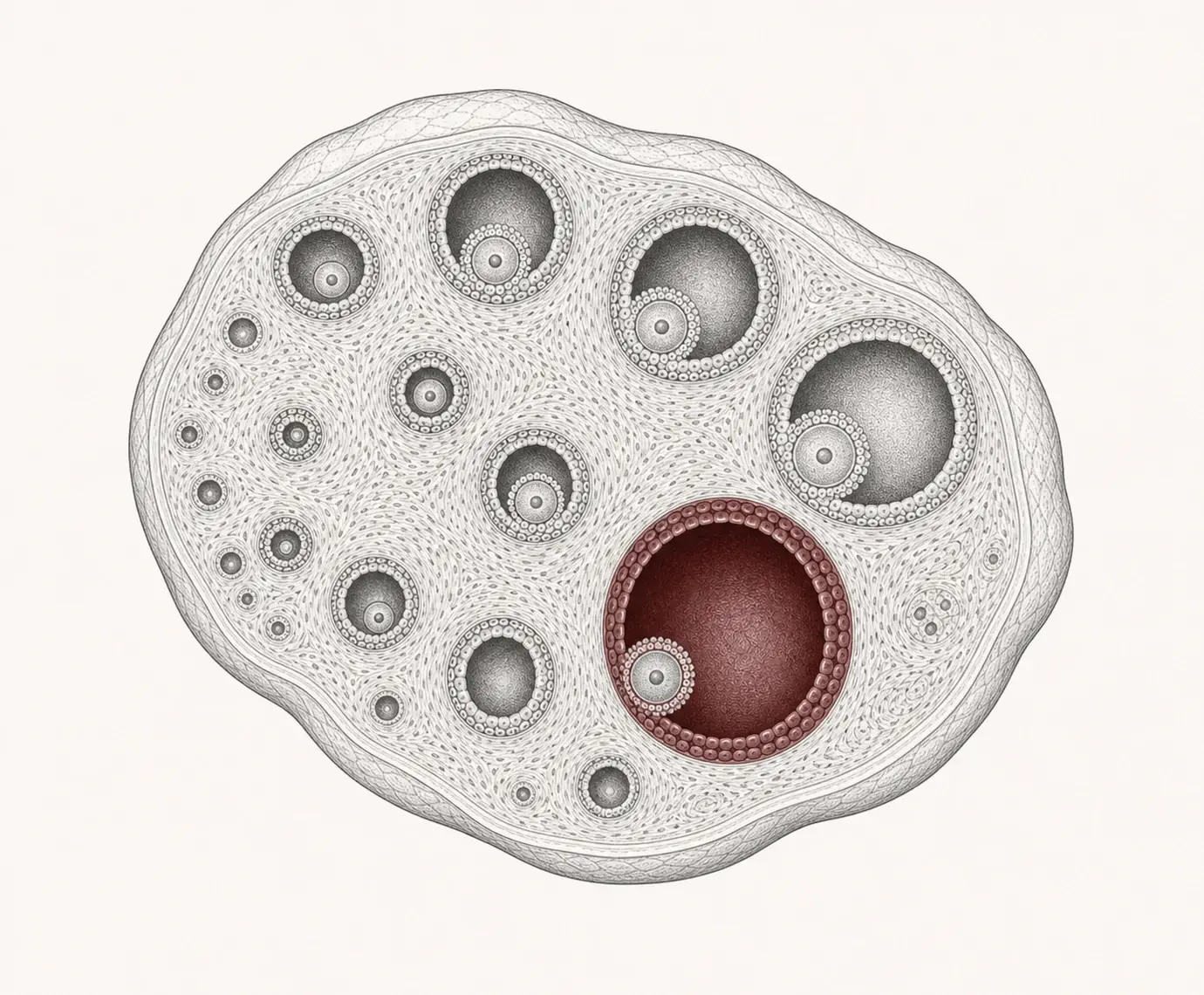
Ovarian follicles and cumulus–oocyte complexes
Oocytes begin in the ovary
Each follicle is a fluid-filled structure in the donor mare’s ovary. Inside, a cumulus–oocyte complex contains the oocyte that may be recovered during OPU.
- Stage 02Laboratory stage
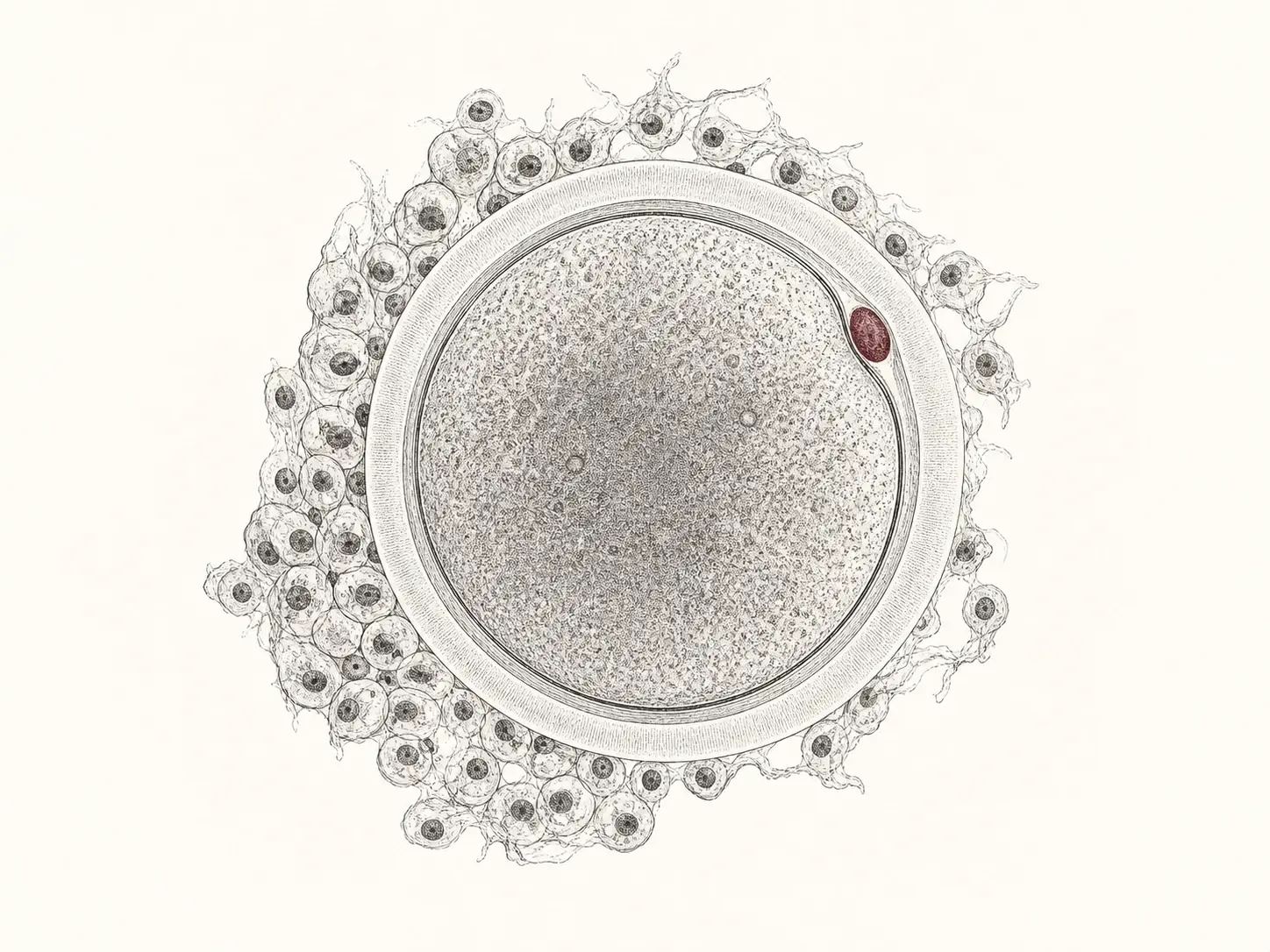
In vitro maturation to metaphase II
The oocytes mature
Recovered oocytes are cultured and evaluated. Only oocytes that reach the mature MII stage are candidates for sperm injection.
- Stage 03ICSI
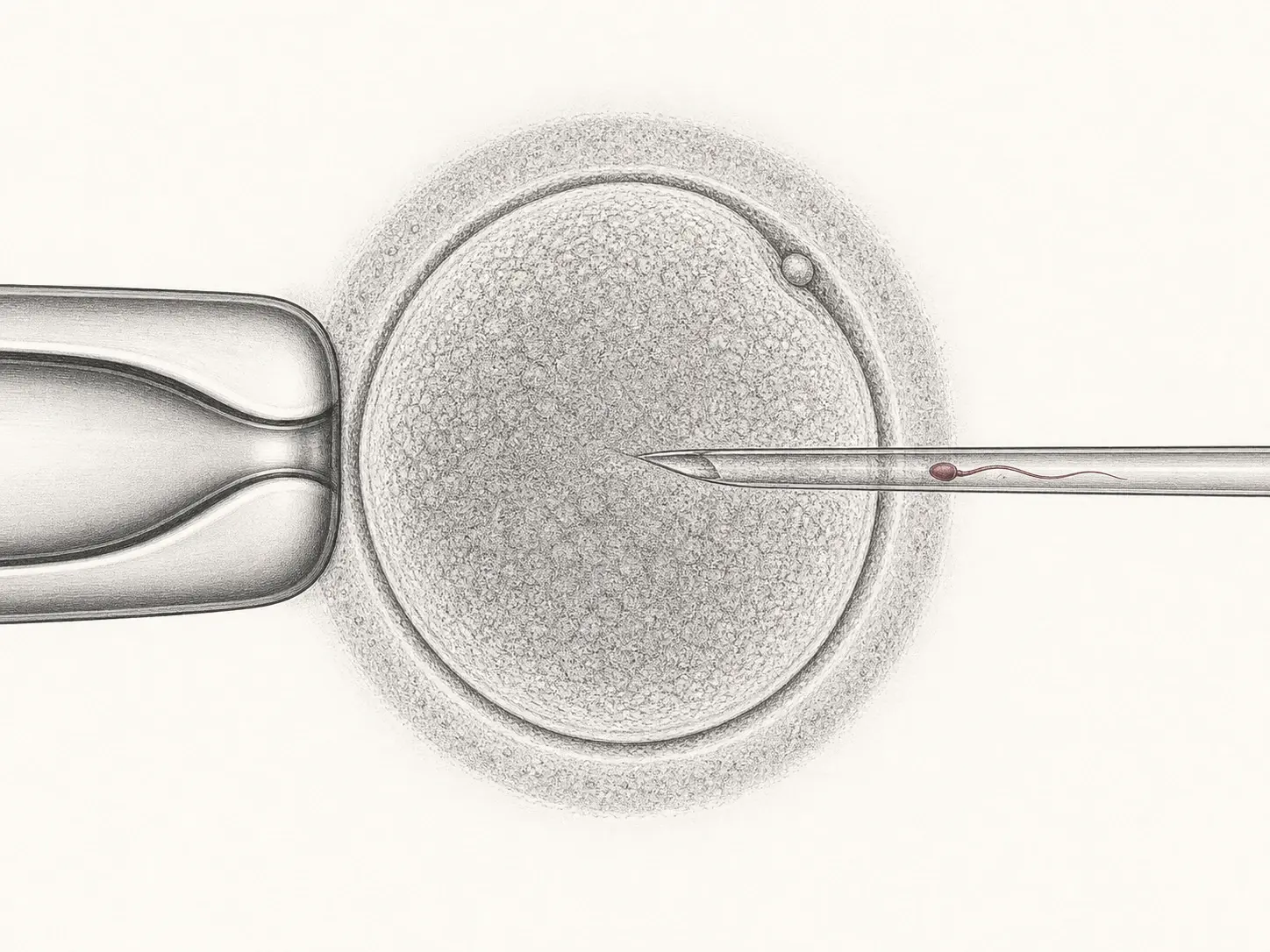
Intracytoplasmic sperm injection
One sperm is injected
An embryologist selects a sperm cell and places it directly inside each mature oocyte. Injection begins development; it does not guarantee an embryo.
- Stage 04Early culture
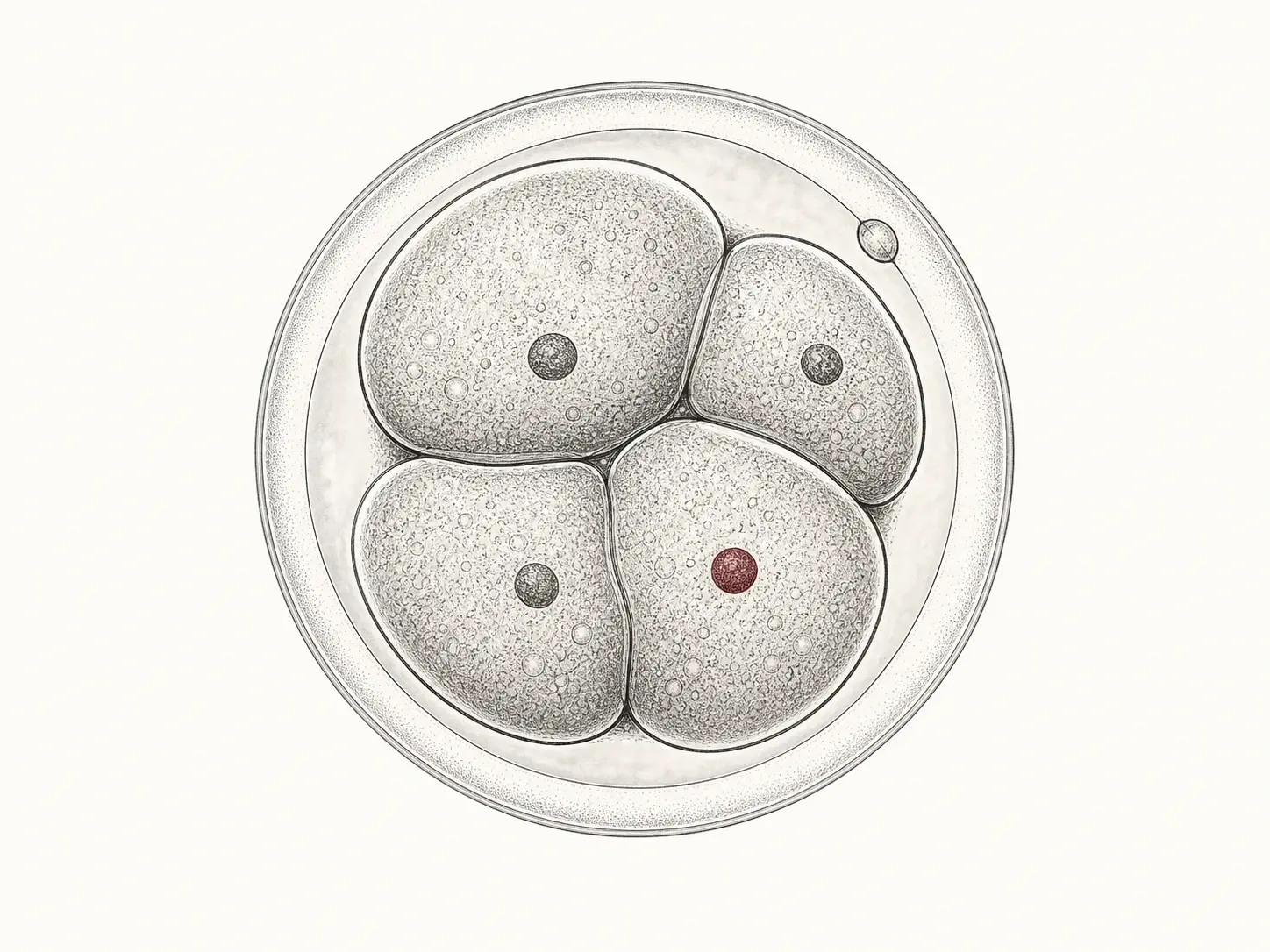
Embryonic cleavage
Cells begin dividing
A successfully activated oocyte may divide from two cells to four, eight, and beyond. Cleavage is an early milestone—not the final embryo rate.
- Stage 05Mid-culture
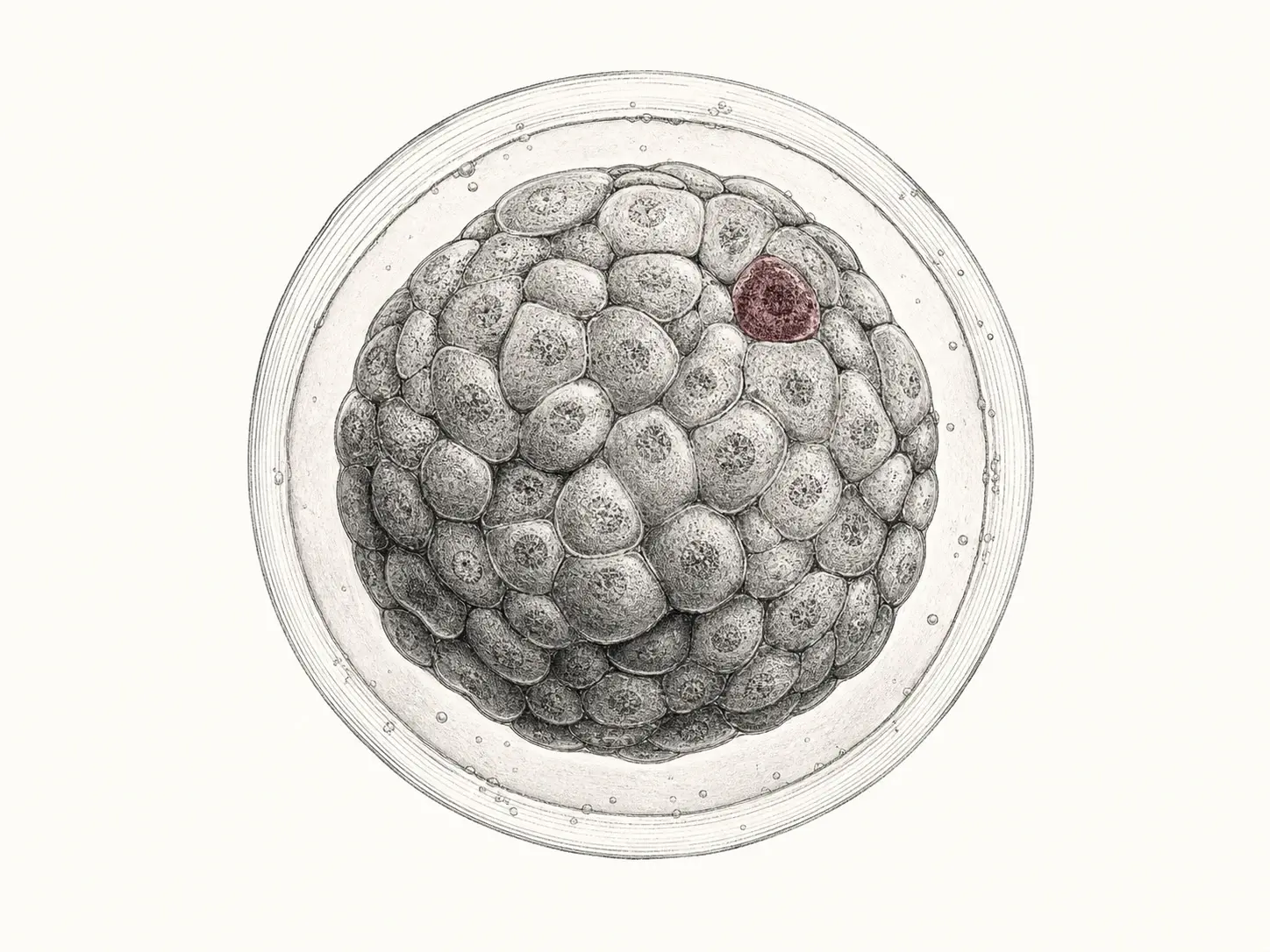
Compaction and morula formation
The cells organize
The dividing cells compact into a morula. Some cleaved embryos stop before this stage, which is why cleavage and blastocyst rates differ.
- Stage 06Commonly D7–D8
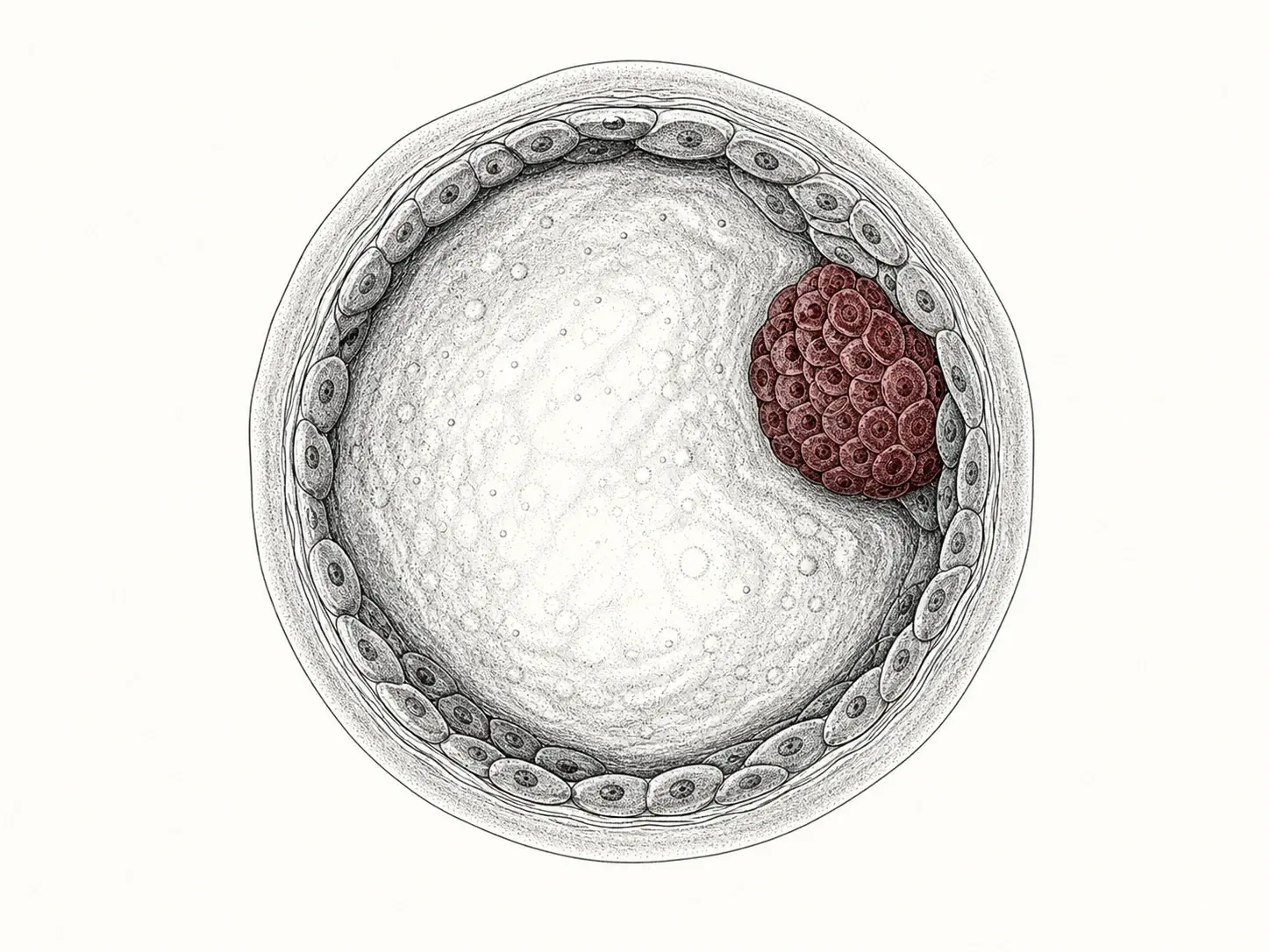
Blastocyst development
A transferable embryo forms
An embryo that reaches the blastocyst stage may be evaluated for fresh transfer or vitrification. Transfer, pregnancy, and live foal remain later outcomes.
The embryo is not the finish line. Warming or fresh handling, recipient transfer, pregnancy establishment, ongoing gestation, and live foal are separate later outcomes.
See every denominator →