Equine ICSI Success Rates Explained
Understand maturation, cleavage, blastocyst, embryos-per-mare, pregnancy, and live-foal results without mistaking one stage for another.
Written by Solo Select Horses Reviewed July 16, 2026

The short answer
There is no single equine ICSI success rate. Results are measured at several stages: oocyte recovery, maturation, cleavage after injection, blastocyst development, pregnancy after transfer, and ultimately live foals. A percentage is meaningful only when its denominator, sample, reporting period, and endpoint are stated.
01
The ICSI results funnel
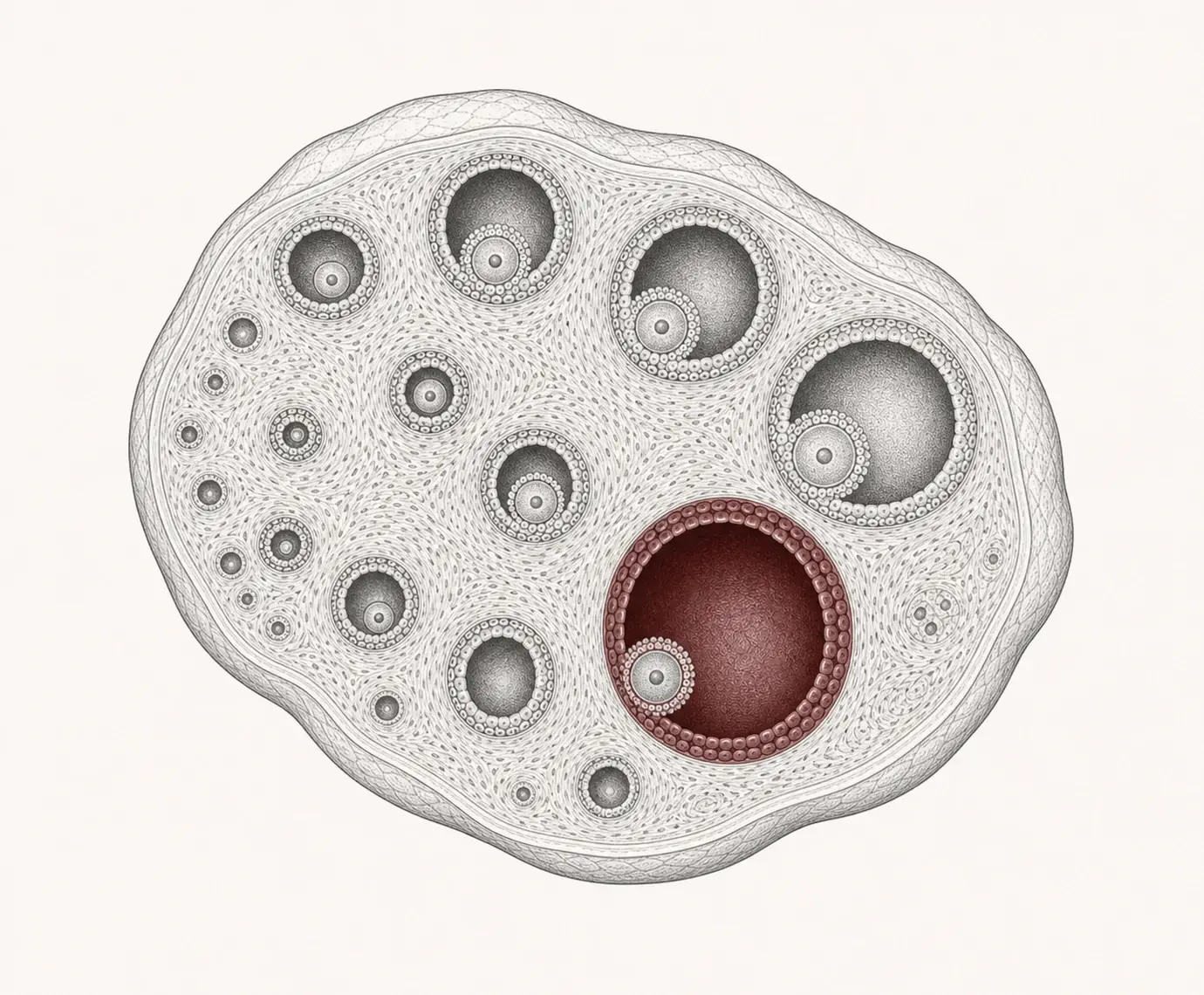
Begin with follicles aspirated, then follow oocytes recovered, mature oocytes, injected oocytes, cleaved embryos, blastocysts, embryos transferred, pregnancies, and live foals. Attrition can occur at every transition.
A laboratory may calculate blastocyst rate from all recovered oocytes, mature injected oocytes, or cleaved embryos. Those percentages are not directly interchangeable. The published denominator must travel with the number whenever it is repeated.
02
GeneTech's published operating figures
GeneTech publishes the following figures on its Franchise Opportunity page: 60.3% maturation, 73.6% cleavage, 35.3% blastocyst rate among cleaved embryos, 1.67 average blastocysts per mare, and 67.3% pregnancy rate. GeneTech also states that it produced more than 6,000 embryos during the 2022 and 2023 breeding seasons. Source: GeneTech; reporting period stated for embryo count: 2022–2023; source checked July 16, 2026.
These are GeneTech-reported operating figures, not a forecast for an individual mare. The public summary does not state the complete sample size, reporting period for every rate, pregnancy-check day, fresh-versus-frozen transfer mix, or whether “per mare” means per aspiration session. Breeders should request the current definitions and dataset when comparing laboratories.
- Maturation: 60.3%
- Cleavage: 73.6%
- Blastocyst rate among cleaved embryos: 35.3%
- Average blastocysts per mare: 1.67
- Pregnancy rate: 67.3%
- More than 6,000 embryos reported for the 2022–2023 breeding seasons
03
Questions to ask about any percentage
Ask what was counted, what it was divided by, how many cases were included, when the work occurred, and whether shipped and in-house oocytes were combined. For pregnancy data, ask the day of examination, embryo type, warming status, recipient source, and whether losses after the first positive examination are included.
A current live-foal rate is the most complete outcome but takes the longest to mature and may reflect transfer and pregnancy management outside the ICSI laboratory. Embryo-production data and foal-production data therefore measure related but different systems.
- What is the numerator?
- What is the denominator?
- How large is the sample?
- What dates does it cover?
- Is the result per oocyte, aspiration, embryo, transfer, or mare?
- Are fresh and vitrified embryos separated?
- At what pregnancy day was success recorded?
04
Why an individual mare can differ
Mare age, follicle population, oocyte competence, reproductive history, semen quality, handling, laboratory conditions, embryo development, recipient timing, and simple biological variation can all affect the path from aspiration to foal.
An average describes a group. It does not promise that a particular aspiration will produce the average number of oocytes or embryos. Zero embryos and multiple embryos are both possible outcomes from an individual session.
Common Questions
Direct answers
- What is a good blastocyst rate for equine ICSI?
- A blastocyst percentage cannot be evaluated responsibly without its denominator and sample. Ask whether it is calculated from recovered oocytes, mature injected oocytes, or cleaved embryos, then compare like with like.
- Does a cleavage rate equal an embryo rate?
- No. Cleavage is an early developmental milestone after injection. Not every cleaved embryo reaches the transferable or freezable blastocyst stage.
- Does an embryo guarantee a pregnancy?
- No. A transferable embryo must still survive handling or warming, be transferred into an appropriate recipient, establish pregnancy, and continue developing.
Sources and Methodology
Where these answers come from
GeneTech-specific statistics are identified as partner-reported operating figures. General medical and biological explanations use veterinary or primary technical sources. Percentages should not be compared unless their denominator, population, endpoint, and reporting period match.
- GeneTech: published operating figures
GeneTech Franchise Opportunity page, checked July 16, 2026. The page assigns 2022–2023 to its 6,000+ embryo count but does not publish a date range or full denominators for every displayed rate.
- UC Davis Center for Equine Health: assisted reproductive technologies