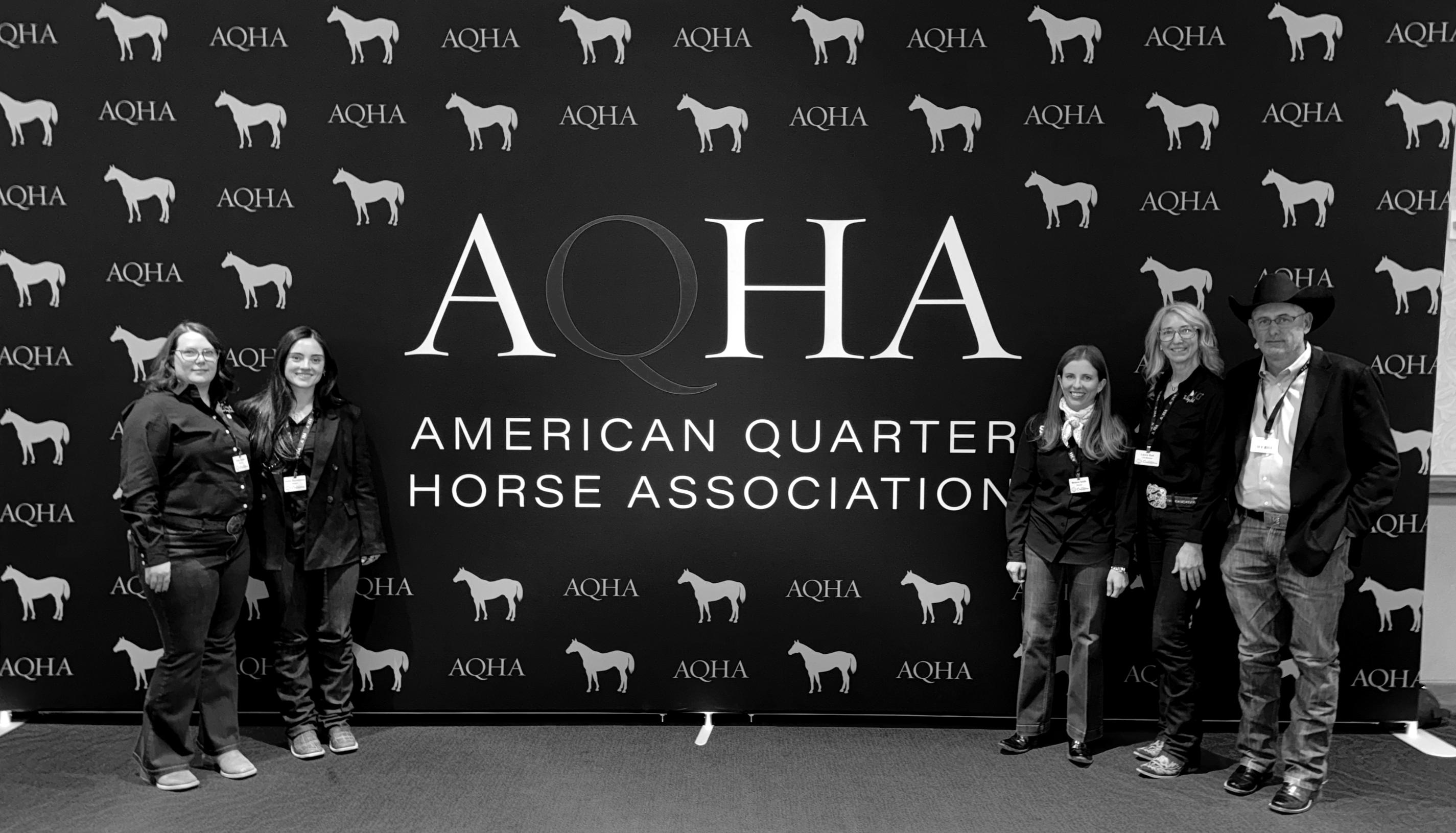
The AQHA Two Year Rule: How It Works, the Impact, and Your Role

Whether you strongly support the rule, strongly oppose it, or are still trying to understand how it affects you, the outcome will be decided by member participation, not online debate. Here’s what every AQHA member should know.
The Two Year Rule
In 2015, AQHA adopted rules REG111.6 and REG112.9, commonly referred to as the “Two Year Rule.” For stallions and mares foaled in 2015 or later, frozen semen or embryos may not be used more than two years after the horse’s death or reproductive inactivation.
**REG111.6 : **For a stallion foaled in 2015 or after, semen may not be used to produce an AQHA-eligible foal more than two calendar years following the year of his death or after he is gelded. (Example: A stallion foaled in 2015 that dies in 2019 may not have semen used after December 31, 2021.)
**REG112.9 : **For a mare foaled in 2015 or after, embryos may not be used to produce an AQHA-eligible foal more than two calendar years following the year of her death or after she is spayed. (Example: A mare foaled in 2015 that dies in 2019 may not have embryos used after December 31, 2021.)
When embryos are involved, both parents’ timelines apply. (Example: If a sire foaled in 2015 dies in 2021, and an embryo was created and frozen in 2018, that embryo may not be used after December 31, 2023—even though it was created years earlier.)
Under the current rule, AQHA registration eligibility expires based solely on a calendar deadline, even when semen or embryos were legally collected and stored.

This Is Not A Recycled Complaint, It’s A Delayed Impact
The Two Year Rule affects more than a small group of breeders, which is why it continues to resurface.
The rule has been in place since 2015, but scrutiny has increased as:
- More post-2015 stallions age
- Frozen genetics become more common
- Younger breeders invest long-term
Members who support the rule often cite goals such as encouraging genetic diversity, limiting overuse of certain bloodlines, eliminating genetic disease and placing boundaries around frozen genetics.
Members who oppose the rule point out that it creates restrictions that don’t reflect modern breeding programs or market realities, and mention how the rule disproportionately impacts post-2015 breeders.
It also raises a broader question: should breeding outcomes be limited by regulation when market demand already plays a role? The answer affects future policy well beyond this single rule.
Whichever side you fall on, the rule impacts long-term planning, genetic access, and how AQHA approaches regulation.

Our Perspective
After carefully reviewing the data and participating in this process, we support deleting REG111.6 and REG112.9.
Historical AQHA registration data show that the use of deceased stallions declines naturally over time as demand shifts and breeders move on to new genetics. Market forces, not regulation, have historically limited overuse.
Restricting access to proven genetics narrows options rather than expanding them, particularly for breeders seeking outcrosses.
When genetic options are restricted, breeders lose flexibility and genetic diversity shrinks. The Two Year Rule replaces breeder judgment with regulation, and evidence shows that this approach works against long term genetic health rather than supporting it.
Additionally, the Two Year Rule creates unnecessary animal welfare risk. By placing a hard deadline on genetic use, the rule incentivizes owners to delay humane euthanasia or necessary reproductive retirement in order to preserve breeding options. Decisions about end-of-life care or medical intervention should be based on the horse’s health and comfort, not on an arbitrary regulatory timeline.
End the double standard: rules for thee, but not for me._** _Those who entered the industry after 2015 face limitations that earlier generations did not, while well established breeders **continue benefitting from deceased stallions without limitation.
This is not about money.
**It is about the years invested in the selection, development, and genetic planning of breeding stock cannot be replaced by insurance payouts if they die. **
The impact isn’t limited to large-scale breeders; programs of all sizes feel it, especially those just starting out. The mare or stud you invested everything in to breed or find, and that changed your entire program, can be eliminated by a calendar deadline regardless of genetic merit or demand.
Our position is about preserving breeder choice, promoting the welfare of the American Quarter Horses, allowing market forces to function, and ensuring AQHA governance reflects the full membership, including those building programs today.

The AQHA Mission Statement
"To record and preserve the pedigree and integrity of the American Quarter Horse, while protecting its welfare, promoting its versatility and encouraging lifelong enjoyment of the breed."
**The Mission is to Preserve the Breed. **
**The Rule is to Control the Breeder. **
It’s time to choose the Mission over the Mandate.
1. On "Preserving the Pedigree": Erasure, Not Preservation
How can you claim to preserve the pedigree when you are legally mandated to delete it?
A record is meant to be permanent, yet this rule forces a genetic dead-end on horses foaled after 2015.
A rule that mandates the destruction of a bloodline based on a calendar date isn't preservation, it's systematic erasure. If the Stud Book is meant to be a history of our breed, why are you letting a committee rip pages out of the book?
2. On "Encouraging Lifelong Enjoyment": The Ticking Time Bomb
You promise members 'lifelong enjoyment' of the breed, yet you’ve placed a ticking time bomb on our investments and our legacies.
For many breeders, 'lifelong enjoyment' means seeing a stallion’s influence reach into the next generation ten or twenty years down the road. My ability to enjoy and utilize the genetics I have spent a lifetime developing shouldn't expire because a committee’s stopwatch ran out.
You are effectively telling the next generation of breeders that their 'lifelong' enjoyment has a two-year shelf life.
3. On "Protecting Welfare": The Cruelty of the Clock
The Two-Year Rule creates a dangerous animal welfare risk that the committee ignores.
By placing a hard deadline on genetic use, you are incentivizing owners to delay humane euthanasia or necessary reproductive retirement just to keep a breeding window open.
Decisions about end-of-life care should be made between an owner and a veterinarian based on the horse’s comfort, not dictated by an arbitrary regulatory timeline.
When you penalize mercy with a genetic death sentence, you aren't 'protecting welfare'; you are weaponizing the clock against the horse."
How AQHA Rule Changes Work
This is our interpretation of the process. We encourage to read the AQHA handbook for yourself.
**Phase 1: Proposal Submission **
Rule change proposals for this year were submitted before the December 31st deadline. Melanie Smith formally proposed deleting the Two Year Rule, which will be discussed at the 2026 AQHA Convention. All rule change proposals scheduled for discussion will be published and released prior to the Convention.
Phase 2: The Stud Book & Registration Committee | Saturday, March 14
Proposals are heard by the appropriate committee first.
- Committee meetings are an "Open Discussion" session. Members can speak, present research, and voice support or opposition.
- This is the primary time to convince the committee members of your opinion on the matter.
Phase 3: Committee Recommendation & Vote | Sunday, March 15
The committee meets in a semi-closed session to finalize their stance.
- Committee members discuss the matters again on Sunday where members can attend but cannot participate. After discussion on each proposed rule change, the committee members will vote to Approve, Deny, or Amend the proposal.
- The committee chair prepares a list of recommendations that will be read aloud to the entire AQHA membership the following day.
Phase 4: The General Membership Business Meeting | Monday, March 16
This is the most critical time for the general membership to have their say.
- Each committee presents all of the recommendations prepared on Sunday.
- Regardless of whether the committee votes to"Approve" or "Deny" a proposal, any member can stand up and challenge that recommendation by addressing the Executive Committee.
- If challenged, the AQHA President will call for an electronic vote. All members in attendance use electronic clickers to cast their vote. This provides a direct "voice of the membership" to the Board.
Phase 5: The Board of Directors Meeting | Monday, March 16
Immediately following the membership meeting, the Board of Directors (BOD) convenes for the final decision. The AQHA Board of Directors ensures proportional representation similarly to the U.S. House of Representatives, where each state or province is allocated a specific number of seats based on its AQHA horse population.
- Regardless of the general membership’s clicker vote, the BOD must still vote to finalize the change. A Director must formally present the item for it to be considered at this level.
- Most rules get a secondary review by the Executive Committee in April, but Registration Rules and Bylaws do not.
- Because the Two Year Rule is a registration rule, the Board of Directors' vote is the final authority. Whatever they decide on Monday afternoon becomes the official law of the AQHA.
Critical Advice for Attendees
A proposal isn't "dead" or "passed" until the Board of Directors meeting concludes. If you want the Two Year Rule deleted, you must be present and prepared to support the challenge during the Monday Membership meeting to ensure the Board sees a strong consensus before they cast the final vote.
To better understand how AQHA rule changes work, watch
.
What You Can Do Right Now
If you want a voice, the 2026 AQHA Convention on March 13–16 at the South Point Hotel in Las Vegas is where it happens. Regardless of where you stand, your opinion only counts if you are eligible to participate.
To vote, speak, or be counted, you must:
- Hold a current AQHA membership at least 60 days prior to Convention (Deadline to renew your AQHA Membership is: January 11)
- Register for the AQHA Convention
- Book your hotel and attend Convention in person
Key meetings related to this rule:
- **Saturday, March 14 | 2–5 p.m. **Stud Book & Registration Committee Meeting
- **Monday, March 16 | 9–11 a.m. **Membership Business Meeting
View the full 2026 AQHA Convention Schedule
If you cannot attend in person, you may submit a written statement to twoyear@soloselect.com. All letters, both for and against the rule, will be printed and provided to Stud Book Committee and Executive Committee members.
Contribute to the ongoing discussion by joining the AQHA Two Year Rule Discussion group on Facebook.